Scratch Coder Dojo Guides
March 21, 2012 Leave a comment
More explanation later, but a useful place to keep Coder Dojo Related Resources
Scratch Belt Tests
Starting Games in Scratch
Scratch Team Challenges
People, Technology and the Business of Software
March 21, 2012 Leave a comment
More explanation later, but a useful place to keep Coder Dojo Related Resources
Scratch Belt Tests
Starting Games in Scratch
Scratch Team Challenges
February 18, 2010 Leave a comment
Quick Review
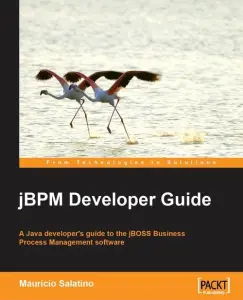
I would have bought the Packt JPBM workflow book even though I got a free review copy. I wish I had it when I was first learning Workflow / jBPM
Long Review
I like workflow, which doesn’t tend to make me very popular at parties. But, since you’re reading this blog, I’ll assume that you have some interest in Workflow, and will now proceed to tell you all about it (if I’ve got this wrong, and you’re using Google Reader, hit the ‘J’ button now to speed on to something more interesting. We’ll forget all about this in the couple of days when I next blog).
Still here? While most computer programs aim to finish as soon as possible, workflow programs can run over many hours , days or weeks (stick with me, this gets better). Most of the difficulties that programmers face when coming to workflow aren’t technical (workflow is no more difficult than using one of the many web frameworks out there) but conceptual.
So where does the book come into this?
Put simply, the book lets you overcome those three big problems more quickly.
Yes, it deals with the ‘nuts and bolts’ of workflow – how to setup the framework. How to use the Eclipse based editor to draw / design your workflow. How to the use the various tasks that come bundled with the framework, and how to write your own. How to persist your workflow so that even if the system fails, the business can still recover. But all of these are covered quite well in the JBoss jBPM documentation, even though having it in book format is very useful.
Where the book is really good is that it talks you through the concepts of workflow, why you should be using it, and gives you the big picture straight away. It also will help convince you (or your boss) that an off-the-shelf framework is much, much better than even thinking of writing your own.
Combined with the fact that jBPM is open source, and is available for free download from JBoss / RedHat (i.e. it is low cost to start, but is credible enough to deploy in the enterprise), this make the book an ideal way to experiment with workflow. Even if you choose (or somebody else chooses for you) to use an alternative workflow framework, once you mastered the concepts (which are the same for most frameworks), picking up the technical details is relatively easy.
Things I didn’t like about this book; One is partly jealously – the style of the book (making a complex subject easily available to beginners) is one that I wish I had mastered in my own book. The other is that while the examples are very good in each chapter, it would have been good if each sample built on the one previously, so that you ended the book with quite a sophisticated system. Given my interest in other JBoss projects (such as JBoss Rules / Drools) it would have been good if these were mentioned and explained (e.g. the Drools rule engine integrates well with decision making nodes)
Minor gripes, and all very specific to my interest in JBoss technology. I would still buy the book if despite knowing all of this, given that it introduces the concepts and technology so well.
February 8, 2010 Leave a comment
It’s been about 18 months since I started my new job, and if you haven’t already noticed the update on my LinkedIn status, it may or may not surprise you that I’ve been working for Enterprise Ireland.
I’m pleased to announce the (soft) launch of Enterprise Ireland’s third blog – BestConnected. (For the record , the other two are the very successful EI Americas, and EI Research and Commercialisation blogs).
Best Connected is the overarching theme of Enterprise Ireland’s software strategy (pdf). It aims to take advantage of Ireland’s size (where everybody knows everybody elses cousin) and link together the tech community, EI Client Companies, Multinationals , 3rd Level Education and the Public Sector. The BestConnected Blog also features specific channels for Public Sector , Financial Software and Services, and Cloud / Software as a Service providers (with more to come).
In line with Enterprise Ireland’s mantra of promoting exports, export led jobs, there are specific sections for company profiles for software and solutions companies.
Company Profiles on EI Best Connected Blog
February 1, 2010 Leave a comment
If you’re a consultant, the place to make money is just before an idea / process / technology goes mainstream. Too early and you risk been seen as a nutcase. Too late are you get lost in the chorus of ‘me too’.
The best method of gauging when a technology idea is going mainstream is the Economist Magazine. When they publish an article about an emerging idea / technology, they’re doing it on behalf of their readers – the ‘informed mainstream, including the decision makers that you’ll be pitching you proposal based on that technology to. So far , they’ve called it right about the Internet, Agile Projects, Open Source and Cloud computing.
So, for all that have been calling for the last 18 months that ‘Social Networking is going mainstream’ , the Economist has published a special report on the issue.
Well worth a read, even if you think you know it all about Social Networking already.
January 22, 2010 1 Comment
Currently playing with Foresight, a Getting Things done plugin for Outlook.
It’s now free, and fixes the traditional problem with the Outlook task list of not being able to handle anything beyound the most simple of projects. Watch this blog for how it goes.
December 19, 2009 Leave a comment
In a previous life, I’ve been lucky to work with two very good JBoss Products – JBoss jBPM (Workflow) and JBoss Drools (Rules). Just in case you missed it; slides from the IJTC conference (jBPM), Rules presentation to the jBPM conference and of course not to forget the Rules Book. The lines between jBPM and Drools have blurred slightly, but the competing open source teams just enhance the quality of both products, and which one is best very much depends on the problem that you have at hand.
So, I’ve been asked by Packt (the guys how published my book) to review the new jBPM Developer guide book. So, not only do I get to help a fellow author (Good Karma), I get the catchup on features of jBPM I may not have used yet in my professional capacity, and I get a free book. What is there not to like?
Disclaimer – getting free copy, but am otherwise free to write good / bad / or completely off the wall ideas about it. Watch this space.
December 2, 2009 3 Comments
Full notes and links below. Key Learning points

The iPhone as an Emerging Enterprise Platform
1.15pm Wednesday 2nd December 2009
Venue – The Alexander Hotel Dublin .
The iPhone has captured significant mindshare since its launch in 2007, and in particular the application development model and the iTunes App Store, which has had over two billion downloads of over 100,000 applications.
There has been a move from games and other ‘fun’ applications to software companies looking to add mobile channels for their products. Enterprise focussed companies like Intuition are developing iPhone applications in order to add to the value of their core product or service.
As part of the Enterprise Europe Network, Enterprise Ireland are hosting an information and networking event on December 2nd in Dublin.
This is a chance for software companies to explore the opportunities presented by mobile applications and Apple’s iPhone in particular. Topics covered will include:
There will also be an opportunity to meet with the iPhone developer community in Ireland.
Enterprise Features iPhone – Dermot Daly, Tapadoo
What is an iPhone?
Enterprise features
All stuff Nokia/ Blackberry do, but iPhone slicker
Apps
Native Apps (code to phone)
iPhone SDK (4 layers 20+ frameworks each)
Sample Native Applications
Challenges
The Market
Developer
Intuition Keith O’Loughlin (CTO)
“Intuition’s experience with iPhone”
Scaling / eLearnging
Lifestyle (use again and again, evangilise) – doesn’t happen for PC’s. All about the user experience
iPhone and Enterprise
Developer: good that single screen size and form size (develop once) , only 3 OS v Java experinece
Apple; focus on qualiy and brand – control!!
Repeat: Not about the technology, about the user
Average phone replaced every 2 years – very easy for market to change
Opportunites / Pitfalls
MyHome.ie Keith Mahon
“Experiences with MyHome.ie on the iPhone”
Head of Technology , Irish Times digital group.
Lessons Learned
Success
App
Strength and Weakness
iPhone - a new Frontier for payments
WorldNet TPS
Enterprise Ireland HPSU ( Startup) – provide secure online payment (Payment Gateway) going 2 years, product 1 year.
See Opportunity as enabling business – promote iPhone as payment terminal
Complements existing business / other virtual access points such as laptop / PC
For business this means e.g. Tour Operator / Sell items on Tour Buses while promoter is still on road
Competitor to iPhone in payments space is Desktop – very different proposition (good and bad)
PCI Compliance (part of Visa contract) means storing credit card info on PC / or paper means fines up to 25,000 Euro for each infringement
Moving to (all ideas that have been tried before , with various success, mainly due to societal factors
A lot of the leading payment players behind these ideas – will market take off?
OS3 – Damian O’Suilleabháin
“Approaches to iPhone development & the Irish iPhone Developer community”
OS3 develop iPhone apps (3 public , more on way)
Can’t activate iPhone without giving Credit Card details – very low friction sell through AppStore – like DoCoMo model.
Why iPhone?
Web Apps v Native Apps
InHouse v Outsourced Development
iPhone Developer Community in Ireland